


Selecting Breeding Dogs
The hiking buddy, boating companion, travel partner, or beloved family dog you're searching for starts with thoughtful decisions long before a litter is born.
Why Breeding Dog Selection Matters
Health testing and genetic testing aren't just boxes to check. They are tools that help breeders make thoughtful decisions when selecting future parents. While no breeder can guarantee a dog will never experience a health problem, these evaluations help reduce risk and increase the likelihood of producing healthy, trainable companions that can enjoy long, active lives with their families.
The Short Version..
Prior to a dog becoming part of our breeding program we evaluate:
✅ Genetic health and inherited conditions
✅ OFA-certified hips and elbows
✅ Correct structure and bite
✅ Temperament and trainability
✅ Ability to thrive as a family companion
For the detailed description of each of these four categories and how they are evaluated, keep reading.
1- Genetic Testing
Genetic testing allows us to see information that can't be evaluated through physical exams alone. By analyzing a dog's DNA, we can make more informed breeding decisions and reduce the risk of passing inherited conditions to future generations.
What Genetic Testing Tells Us
Inherited Health Conditions
DNA testing helps identify genetic diseases that may be present in a dog's genetic makeup, even when the dog appears completely healthy. By understanding which conditions a dog may carry, breeders can make thoughtful pairing decisions that reduce the likelihood of producing affected puppies.
Examples include conditions such as Progressive Retinal Atrophy (PRA), Degenerative Myelopathy (DM), Von Willebrand Disease, and other traits relevant to the Poodle breed.
It's important to understand that genetic testing is a tool for reducing risk, not eliminating it entirely. Some traits can be directly tested, while others are evaluated through genetic markers and risk assessments. These tools help breeders make educated decisions aimed at producing healthier puppies.
Genetic Diversity (COI)
Genetic testing also helps evaluate a dog's Coefficient of Inbreeding (COI), which measures genetic diversity. In general, greater genetic diversity is associated with a lower risk of inherited health concerns.
When selecting breeding dogs, I pay attention to COI and strive to maintain strong genetic diversity within my program. Both of my current stud dogs have a COI of 5%, which is excellent and reflects a high level of genetic diversity.
Coat Color & Pattern Genetics
Color testing helps us understand which coat colors and patterns a dog may pass on to its puppies. While color should never outweigh health, temperament, or structure in breeding decisions, color genetics can help breeders plan responsibly and preserve genetic diversity.
This is especially important when the merle gene is present in the gene pool. Responsible breeders use genetic testing to ensure two merle dogs are never bred together, preventing the increased health risks associated with double-merle puppies.
What This Means for Puppy Buyers
Genetic testing isn't about producing a specific color or checking a box on a breeder's checklist. It's one of the tools we use to make thoughtful breeding decisions that support health, genetic diversity, and the long-term well-being of our dogs.
The goal is simple: to give every puppy the strongest possible foundation for a healthy life as a beloved companion and family member.
I'll share a few snapshots from DNA testing below as examples. Full information on all of our dogs can be found on the Meet the Posse page.
 |  |  |  |
|---|---|---|---|
 |
2- Health Testing
While genetic testing evaluates a dog's DNA, health testing evaluates the dog itself. Health testing includes physical examinations and diagnostic screenings that help assess a dog's overall health and structural soundness.
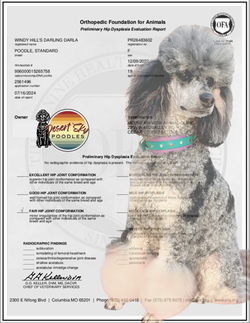
One of the most important health screenings for Standard Poodles is the evaluation of hips and elbows. Conditions such as hip and elbow dysplasia have a hereditary component, meaning they can be passed from parents to their offspring. To evaluate these joints, our veterinarian takes x-rays that are submitted to the Orthopedic Foundation for Animals (OFA), where specialists review the images and grade the quality of the joints.
Dogs with well-formed, stable joints are less likely to experience mobility issues during their lifetime and are less likely to pass those structural weaknesses on to future generations.
What This Means for Puppy Buyers
Healthy structure matters because it affects a dog's ability to comfortably enjoy everyday life. Whether your future companion becomes a hiking partner, a swimming buddy, an agility dog, or simply a beloved family companion, sound joints provide the foundation for an active and comfortable life.
While no screening can guarantee a dog will never develop orthopedic problems, health testing helps breeders make informed decisions that reduce risk and support the long-term health of future puppies.
 |  |  |  |
|---|---|---|---|
 |  |
3- Conformation
Conformation refers to a dog's physical structure and how closely it matches the breed standard. It includes things such as overall balance, movement, proportions, bone structure, and bite.
While conformation is often associated with dog shows, good conformation is about much more than appearance. A dog that is built correctly is more likely to move efficiently, stay physically comfortable, and enjoy an active lifestyle throughout its life.
For Standard Poodles, correct structure contributes to the athleticism and versatility that make them such wonderful companions. Whether your dog's adventures include hiking, swimming, playing fetch, competing in dog sports, or simply enjoying family life, sound structure helps support long-term health, mobility, and endurance.
Bite Evaluation
Another important component of conformation is a dog's bite. Poodles should have a correct scissor bite, where the upper front teeth slightly overlap the lower front teeth. Proper jaw alignment allows the dog to chew comfortably and supports long-term oral health.
I am particularly attentive to bite structure when evaluating breeding dogs. While some bite issues can improve as a puppy grows, I select breeding dogs that demonstrate correct bite alignment and healthy jaw structure.
Why This Matters to Puppy Buyers
Conformation isn't about producing dogs that simply look good. It's about producing dogs that are physically capable of living active, healthy lives. Just as I evaluate genetics, health testing, and temperament, I also evaluate structure so that puppies have the best possible foundation for a lifetime of companionship.
 |  |  |  |
|---|
4- Temperament
Temperament is one of the most important factors in the overall experience of owning a dog. While training, socialization, and life experiences all play an important role, temperament also has a genetic component. Research has shown that traits such as sociability, confidence, fearfulness, and trainability are influenced, in part, by inheritance.
When selecting breeding dogs, I look for those that are naturally confident, friendly, trainable, and comfortable in a variety of situations. A puppy's temperament begins with its parents, but it is also shaped by the experiences it receives during its first weeks of life. That's why I focus not only on choosing breeding dogs with stable, reliable temperaments, but also on providing each litter with early socialization, enrichment, and positive experiences.
My goal is to raise puppies that have both the genetic foundation and the early-life experiences needed to grow into well-adjusted companions.
Why This Matters to Puppy Buyers
The companionship, trainability, and adaptability that families love in Standard Poodles don't happen by accident. They are influenced by both genetics and environment.
Whether you're looking for a hiking partner, travel companion, boating buddy, training partner, or beloved family dog, temperament plays a major role in how well a dog fits into your lifestyle. That's why temperament is one of the most important criteria I consider when selecting breeding dogs.
Because our dogs live as part of our family, you can see their temperaments in action through the photos and videos we share on our website and social media. My hope is that you'll not only see what our dogs look like, but also get a sense of the qualities that make them such wonderful companions.
 |  |  |
|---|---|---|
 |  |
Summary
The goal isn't just to produce dogs that pass tests. The goal is to produce companions that fit naturally into people's lives.
I carefully select breeding dogs based on a combination of genetic screening, health testing, structure, and temperament. This includes evaluating hips, elbows, inherited health conditions, coat genetics, conformation, and behavior, along with the traits that make Standard Poodles such wonderful companions.
While responsible breeding helps reduce the risk of inherited health issues and supports sound temperaments, no breeder can eliminate every possible challenge a dog may face. Accidents, environmental influences, and some health conditions remain outside any breeder's control.
My goal is to use every tool available to make thoughtful breeding decisions and give each puppy the strongest possible foundation for a healthy, active, and fulfilling life. Just as importantly, I believe in being transparent about both the benefits and limitations of these tools so puppy buyers can make informed decisions.